
Robin Verheyen, Joey Baron and Bram De Looze rework Coltrane’s “hidden gem”, “most melancholy record”
Concert (John) Coltrane 100(JOHN) COLTRANE 100: A TRIBUTE TO ONE OF THE MOST INFLUENTIAL JAZZ INNOVATORS
AB, Bozar and Kaaitheater join forces to present a unique tribute to John Coltrane: one of the most influential innovators in the history of jazz. Coltrane sculpted an entirely inimitable signature sound with his saxophone (a Belgian invention by Adolphe Sax).
His rich oeuvre is now considered a sacred legacy: “Many artists achieve greatness but very few produce work that is so moving that it’s considered sacred.” To mark Coltrane’s 100th birthday, in 2026 we honour his legacy with a series of dance performances, concerts, screenings and artist talks.
7:00-7:40 pm
SCREENING: JOHN COLTRANE - LIVE A COMBLAIN-LA-TOUR (1965, RTBF, 38 MIN)
John Coltrane only performed once in Belgium, though not at Bozar in Brussels (where virtually all the jazz icons of the time - Miles Davis, Thelonious Monk or Billie Holiday – had triumphed). However, Coltrane did give a brilliant performance in the picturesque village of Comblain-La-Tour in Liège.
Come again? It was there, in 1959, that the very first European open-air festival took place, organised by WOII veteran Joe Napoli (USA). As a gesture of gratitude for the local hospitality, he founded a charity event years later (the roof of the parish church was in need of repair) under the name Festival International du Jazz. Jazz greats like Chet Baker, Nina Simone were welcomed in the period 1959-1966, and on 1 August 1965 … John Coltrane.
These historic recordings not only captured Coltrane’s single visit to Belgium, they were also the very last filmed footage of Coltrane’s so-called Classic Quartet with Elvin Jones, McCoy Tyner and Jimmy Garrison.
The intense and physical performance – one literally sees the steam rising from their bodies – shows a band at a turning point in its career. A few months later, the quartet split up due to artistic differences.
7:50-8:00 pm
MUSICAL PRAYER/ODE TO TRANE: Alice Coltrane - Ohnedaruth (1968)
To set the tone, on every evening of (JOHN) COLTRANE 100 we listen together to a musical ode to ‘Trane’ that carves deep into the soul.
A year after the death of her husband, Alice Coltrane debuted with the album A Monastic Trio (1968), recorded in their home studio in Dix Hills, Long Island, New York. The baseline featured on the album cover – “This music is dedicated to the mystic, Ohnedaruth, known as John Coltrane” – made clear that this album – containing titles like Gospel Trane of I Want To See You – had a cathartic effect. To complete her monastic trio, she worked with musicians from John Coltrane’s inner circle: saxophonist Pharoah Sanders and bass player Jimmy Garrison (of Coltrane’s Classic Quartet).
Alice recorded the spiritual opening track Ohnedaruth – Sanskrit for ‘compassion’ and also the spiritual nickname borne by John Coltrane during his last years – only six months after her husband passed away. Influential writer LeRoi Jones penned in the liner notes: “Ohnedaruth swings in actuality, because it was chanted a lot by John while working together with his group. It has John’s body in it. His carrying rhythms.”
8:00-8:45 pm
RAPHAEL ROGINSKI
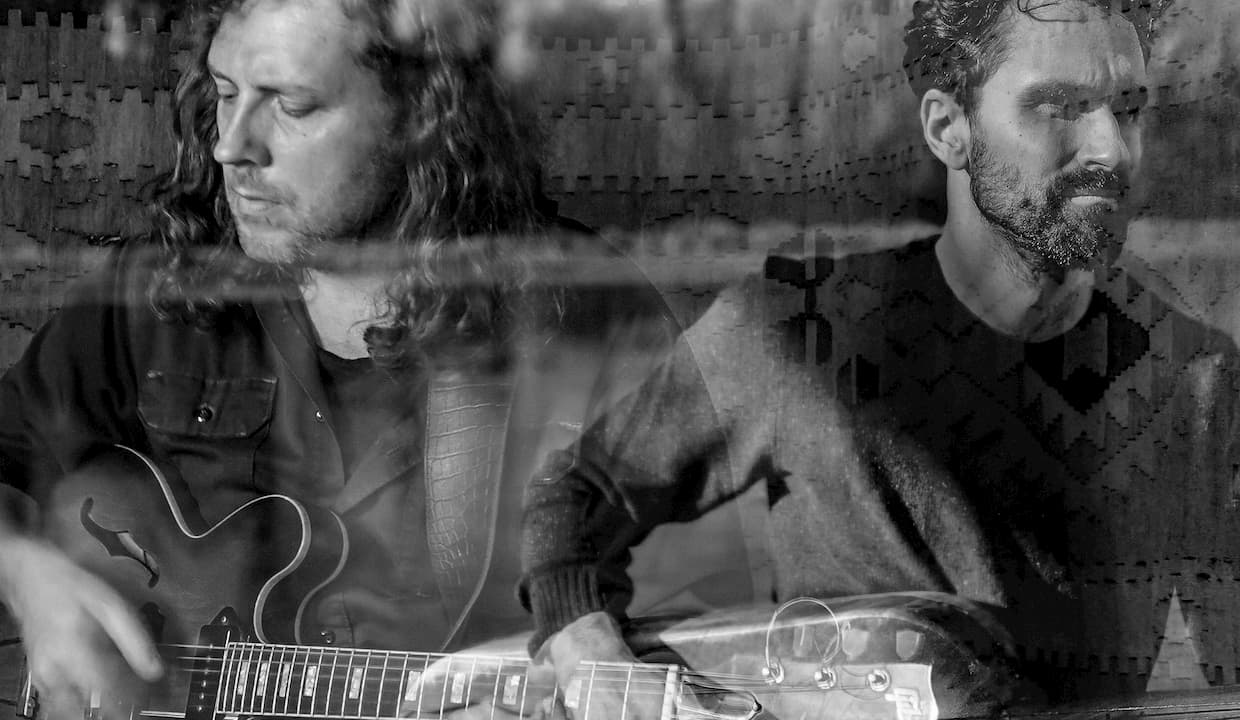
Polish musician Raphael Roginski (PL) wanted to be a sculptor from a young age, until he discovered the guitar. He practised like a man possessed and once told Polish weekly Polityka that he played his guitar “like wild meat, shamelessly and greedily till blood was pouring from my fingers”.
There is little trace of that these days. The guitar style on his latest albums sounds graceful and meditative, with a nod to American primitivism. Pitchfork: “Roginski has developed a singular and unmistakable style of solo electric guitar. His playing is spare, yet his fingerpicking can make it sound like there are four hands working in tandem; it can be hard to believe that there are no overdubs.”
His cult following was fuelled by the reissue of his 2015 album Plays John Coltrane and Langston Hughes. Pitchfork describes this work as “Roginski’s masterpiece”. But those expecting to recognise Coltrane classics like Naima, Mr. PC or Countdown (all from Giant Steps, Coltrane’s first album of original compositions) or Blue Train are in for a surprise.
Pitchfork: “It would take an Olympic leap of imagination” or “In some cases, even the tonal connection is as tenuous as spider’s silk”. Which, of course, makes Roginski’s interpretations all the more unique. Wonderful, because (JOHN) COLTRANE 100 is not looking for copycats, but rather innovators who can further explore Coltrane’s path.
JOHN COLTRANE - CRESCENT (IMPULSE! A-66, 1964)
In 1961, leading American jazz magazine DownBeat wrote a scathing concert review about John Coltrane (with Eric Dolphy at his side). Critic John Tynan: “I listened to a horrifying demonstration of what appears to be a growing anti-jazz trend exemplified by these foremost proponents of what is termed avant-garde music. I heard nihilistic exercises of the two horns… Coltrane and Dolphy seem intent on deliberately destroying [swing].”
That ‘difficult’ reputation has stuck with Coltrane to this day. Yet his body of work contains a string of albums brimming with soothing beauty. Think: the stunning Ballads (1963), his collaborations with the likes of baritone singer Johnny Hartman (1963) or legend Duke Ellington (1963) as well as this hidden gem of his oeuvre: Crescent, from 1964. Upon its release, however, Crescent was quickly overshadowed by Coltrane’s magnum opus A Love Supreme, which was put out only six months later. All About Jazz: “Coming so close in the Coltrane chronology to A Love Supreme, Crescent tends to get lost in the slipstream.” Jazz Desk: “Crescent is of equal importance even if it has become somewhat overshadowed by the following masterpiece: A Love Supreme.”
Among Coltrane enthusiasts, Crescent is considered a hidden gem. (John) Coltrane 100 intentionally spotlights Crescent with a remake of …
9:00-10:30 pm
MiXMONK SUPREME PLAYS JOHN COLTRANE’S CRESCENT (1964)
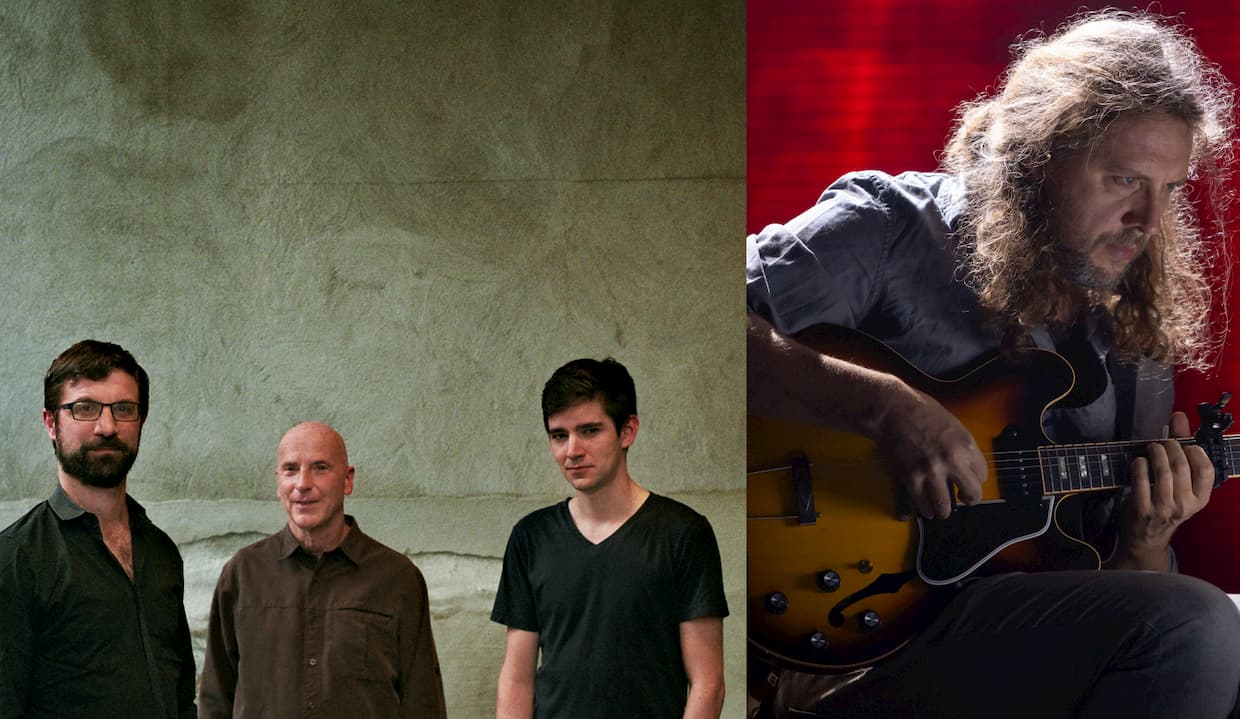
MiXMONK Supreme (BE/US) remains the inimitable trio comprising American drummer Joey Baron (see: John Zorn’s Masada, among others), pianist Bram De Looze and saxophonist Robin Verheyen (1/4 TaxiWars with Tom Barman at his side, among others, or more recently at AB with Drew Gress and Billy Hart). At the request of AB, MiXMONK Supreme reimagines Crescent – described as “Coltrane's criminally underrated record” (Everything Jazz) as well as “Coltrane’s most melancholy record” (Penguin Guide to Jazz). Although Coltrane recorded the album with his legendary Classic Quartet, MiXMONK Supreme takes it on as a trio.
MiXMONK Supreme takes it all even further and also pays tribute to the work of pianist Thelonious Monk who was hugely influential for Coltrane, as he himself stated in DownBeat in 1960: “Working with Monk brought me close to a musical architect of the highest order I felt I learned from him in every way - through the senses, theoretically, technically. I would talk to Monk about musical problems, and he would sit at the piano and show me the answers just by playing them.”
Even though John Coltrane’s Crescent and Thelonious Monk form the historical backbone of this project, MiXMONK Supreme also presents new original work. Their own compositions honour the roots of jazz while also extending a hand to the future.
Line-up:
Bram De Looze (BE) - Piano
Robin Verheyen (BE) - Saxophone
Joey Baron (US) - Drums
 Mobility
 Questions & Answers
 Drink tokens